Why would I fly to South Korea alone just for skin treatment?
To be honest, a year ago, I wouldn’t have dared to even consider such a thing.
I don’t speak Korean, I can’t make sense of the complicated subway maps, and I don’t even know how to schedule a consultation with a Dermatology specialist in South Korea. Yet, in early 2026, I actually boarded a flight to Seoul alone, carrying my suitcase behind me.
The reason that convinced me to make up my mind was quite simple: for the same project, it can be done three times in South Korea, while in Taiwan, it can only be done once.
I had a HIFU treatment at a chain medical beauty clinic in Taipei. 600 treatments cost 40,000 New Taiwan dollars. A friend who had the same treatment in Gangnam District, South Korea, with the same equipment and the same number of treatments, only spent less than 15,000 New Taiwan dollars. The price difference is enough for me to buy a round-trip ticket.
But on the other hand, because it’s so cheap, I’m really worried about running into problems. After all, if the language barrier makes communication difficult, what if I end up at an unreliable clinic?
So I spent a whole two weeks preparing everything – from handling the visa, booking the flight and accommodation, to choosing the hospital, selecting the reservation platform, understanding the admission process, and planning the post-operative care. I double-checked every detail.
Looking back now, this journey turned out to be much simpler than I had imagined.
The following guide is based on my own real experiences. It explains in detail how to proceed through every step, from applying for a visa to attending follow-up consultations.
🛂 Step 1: How to obtain a visa?
Many people think that going to South Korea for cosmetic surgery necessarily requires obtaining a “medical visa”, but this is not always the case.
I myself used my multiple travel visas over the past five years to enter the country, and I never needed a letter of invitation from a hospital.
| Types of visas | Who it is suitable for | Duration of stay | Key requirements |
|---|---|---|---|
| Single-entry tourist visa | Going there for the first time and doing it only once. | 30 days | Basic information + financial proof |
| Signed multiple times over the course of five years | Plan regular follow-up visits | Every 30 to 90 days. | Some developed countries keep records of people entering and leaving their countries. |
| Medical Visa | Surgery and hospitalization are required. | More than 90 days | Hospital invitation letter + 2 million Korean won ↑ Spending opportunity |
| Visa-free access (for Jeju Island) | Just go to Jeju Island. | 30 days | Direct flight to Jeju, with a stopover limited to Jeju only. |
My suggestion is: if you are only engaging in skin treatments such as laser therapy, hyaluronic acid injections, or HIFU, it is most cost-effective to renew the registration multiple times within five years. One registration is valid for five years, and follow-up consultations do not require re-application. When applying, simply indicate that it is for “tourist purposes”; there is no need to explicitly mention medical treatments, as this can avoid the requirement to provide an invitation letter from a hospital.
💡 For more details regarding visas, you can refer to my previous article “Comprehensive specific application requirements for multiple-entry visas valid for five or ten years.
✈️ Step 2: What should you prepare before setting off?
After obtaining my visa, there were three things I did before setting off, each of which was crucial:
① Choose the right booking platform
I believe this step is the most crucial decision in the entire journey.
Although there are numerous Dermatology clinics in South Korea, for those who do not speak Korean, the biggest challenge is not “which clinic to choose” but “how to make an appointment”. Many of these clinics have their websites in Korean only, and when you call, the staff will only communicate in Korean.
I tried several methods: filling out forms directly on the official website (with no response at all), using third-party booking services (where the fees were ridiculously high), or sending private messages on WeChat (with extremely slow responses). In the end, I chose BeautsGO, and the experience was completely different—Chinese-language interface, transparent pricing, online reservation system, and most importantly, the same prices for both Chinese and foreign customers, without any extra charges just because you’re from abroad.

② Some handy tips for booking flights and accommodations
For air tickets, it is recommended to book them one month in advance. This time, I bought a ticket from Songshan to Gimpo, and the round-trip cost, including taxes, was less than 8,000 Taiwanese dollars. Gimpo Airport is very close to Gangnam District; it only takes 40 minutes by subway, which is much more convenient than using Incheon Airport.
Regarding accommodation, I highly recommend staying within walking distance of the hospital. After the laser treatment, your face will be slightly red, and you definitely won’t want to take the subway back to your hotel. I first checked the location of the clinic on BeautsGO and then used Agoda to find nearby hotels. In the end, I chose one that was just a 5-minute walk from the clinic, which made it extremely convenient to apply a mask at the hotel after the procedure.
③ Final confirmation of the checklist before departure
| ✅ | Double-check the details before you start. | Level of importance |
|---|---|---|
| 1 | Verify the validity period of your visa and the number of entries allowed. | Essential |
| Two | At BeautsGO, it is recommended to book the clinic and schedule the time 1-2 weeks in advance. | A must-do |
| Three | Take a screenshot and save the Korean address of the clinic (to show to the taxi driver). | Essential |
| Four | Download Naver Map; Google Map is hardly used in South Korea. | Recommendation |
| Five | Make sure you have your passport, the confirmation letter for your reservation, and your credit card ready. | Essential |
| Six | Stop using irritating skincare products such as acids and retinol one week before the procedure. | Recommendation |
💡 If you’re still not sure which treatment to choose, you might want to start by checking out thFrom Thermage to HIFU, all the pros and cons as well as the prices of each treatment are clearly listed here.
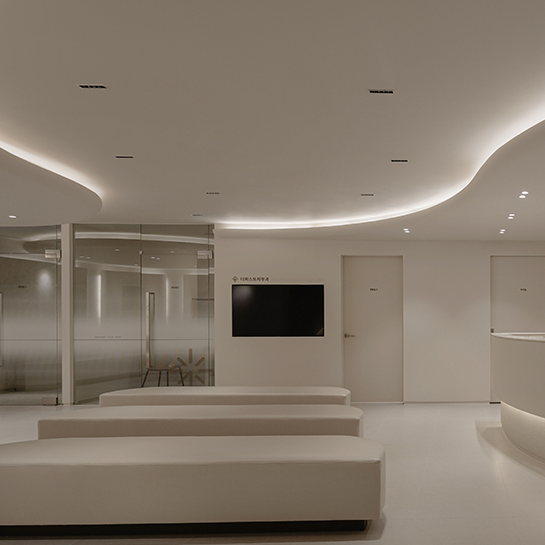
🏥 Step 3: On the day of your visit to the clinic, keep a detailed record of everything that happens.
This was the most stressful part for me – because I didn’t know what I would have to do once I got inside. But in the end, the whole process turned out to be extremely smooth, and I didn’t need to worry at all.
Arrive at the clinic → Check in (within 5 minutes)
I had made an appointment for 10 a.m., so I arrived at the clinic entrance at 9:55. As soon as the receptionist saw me, they greeted me in Chinese (I had specified this preference when making the reservation through BeautsGO). After verifying my name on my passport, they gave me a consultation form in Chinese.
The consultation form is very detailed—it includes information about any allergies, the skincare products currently being used, previous cosmetic treatments, and what specific aspects one wishes to improve this time. After completing the form, the nurse took me for a VISIA skin analysis.
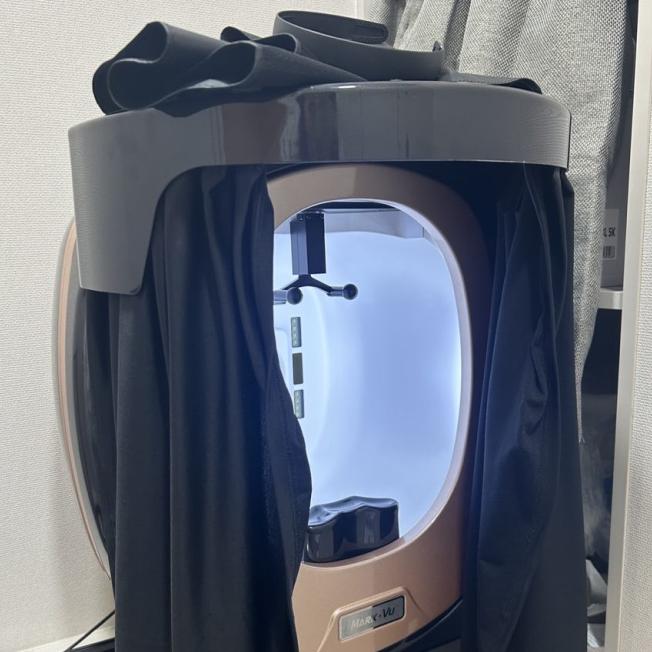
VISIA Skin Analysis (10 minutes)
This machine is truly amazing. Just place your face inside it, and in a few seconds, the scanning is complete — then a bunch of numerical values appear on the screen: Pores, pigmentation, UV damage, wrinkles, skin texture, porphyrins (bacteria), and for each of these aspects, there are scores and rankings.
I saw that my UV damage score was only 40% – which is lower than 60% among people of my age group – and I immediately decided to take more precautions against sun exposure. This test is free, and the data is stored for future reference, so I can compare my results at subsequent check-ups.
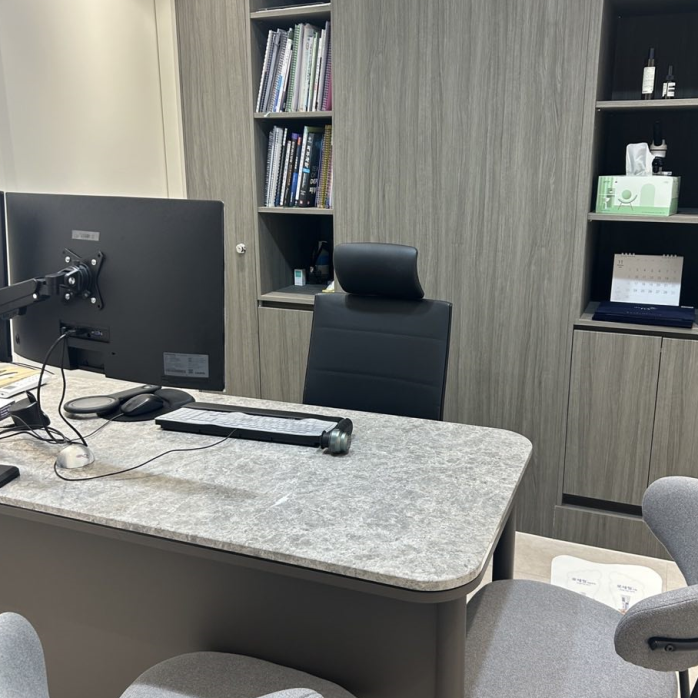
In-person consultation with a doctor (20–30 minutes)
This is what I think is the most commendable aspect of Dermatology in South Korea: doctors allocate sufficient time for consultations, and it’s not the kind of situation where a prescription is issued after just a few brief words.
The doctor held my VISIA report and explained each issue in detail: which ones were congenital (there was nothing that could be done except to maintain the current state), which ones could be improved through lifestyle adjustments (specific solutions were provided), and what the expected results and recovery times for each treatment were.
What really reassured me was that the doctor didn’t insist on expensive treatments. When I mentioned that my budget was limited, he immediately adjusted the plan: we would first address the most urgent issues, and deal with the less important ones later. Such a non-pushy approach is truly rare in the medical aesthetics industry.
💰 Step 4: Common services and price references
There are countless Dermatology treatments available in South Korea, but if it’s your first time, I recommend starting with these categories:
| Project Type | Who it is suitable for | Reference price in South Korea | Recovery period |
|---|---|---|---|
| Hydrofiller injections | Dry, dull, and dehydrated skin | ₩150,000 to ₩300,000 | Slight redness may appear within 1 to 2 days. |
| Pico laser | Spots, acne scars, uneven skin tone | ₩200,000 to ₩500,000 | Scabs form within 3 to 5 days. |
| Korean-style HIFU | Loose, sagging, with blurred contours | ₩300,000 to 800,000 | There is no obvious recovery period. |
| Thermage | Anti-aging for the entire face and Collagen regeneration | ₩800,000 to 1,500,000 | There is no obvious recovery period. |
| Collagen glow therapy | Fine lines, enlarged Pores, and poor elasticity | ₩250,000 to 500,000 | Slight redness may last for 2 to 3 days. |
| Acne treatment | Acne-prone skin, inflammation, and acne scars | ₩100,000 to ₩300,000 | It depends on the specific plan. |
Savings tip: The prices mentioned above are those quoted by South Koreans on BeautsGO – the same prices applied to both Chinese and South Koreans – and they are not the rates offered to foreigners. If you go directly to the clinic to inquire about the prices, you may be given a different figure. Therefore, it is essential to make reservations through a platform to ensure that the prices are transparent and reliable.
💡 Want to know exactly how big the price difference is between South Korea and Taiwan? This article provides a detailed pared to domestic prices. Spending 600 yuan for a full-face treatment, including the airfare, is still a good deal.
💉 Step 5: The real experiences during the treatment process
After the initial consultation to finalize the treatment plan, the actual treatment can begin. The general process is as follows:
The entire treatment process takes approximately 1.5 to 2 hours (including the waiting time for the anesthetic to take effect). To be honest, the most uncomfortable part isn’t actually the laser treatment itself, but rather the cold sensation on the face when the anesthetic is applied – thanks to the anesthetic, I hardly felt anything during the laser procedure.
After the treatment, my face turned slightly red, just like after exercising, but I was completely able to go out and shop right away. That very afternoon, I went to Myeongdong to eat fried chicken, and no one even gave me a second glance.
🧴 Step 6: Postoperative care – details you cannot overlook
Many people think that the treatment is over once it’s completed, but in fact, post-treatment care determines 50% of the overall results. I took the Chinese version of the care guide provided by the clinic and summarized its most important points into a few key items:
| time | It’s feasible. | Not possible. |
|---|---|---|
| Within 24 hours after the procedure | Wash your face with clean water and apply a medical mask. | Putting on makeup, using facial cleansers, drinking alcohol |
| 3 days after the procedure | Practice gentle skincare and drink plenty of water. | Removal of dead skin cells, use of acids, and hot spring baths |
| One week after the surgery | Regular maintenance and light exercise | Intense exercise, saunas, and excessive sun exposure |
| One month after the surgery | Restore all normal care procedures. | — |
Sun protection is of utmost importance! After laser treatment, the skin becomes particularly sensitive to ultraviolet rays. If proper sun protection measures are not taken within one month after the procedure, the spots may become even more severe than before. This time, I brought two tubes of sunscreen with me to South Korea – I applied it before going out, re-applied at noon, and again in the evening, ensuring that ultraviolet rays had no chance to affect my skin.
Another little tip: drink plenty of water after the procedure. Doctors recommend at least 2000 ml per day to help with skin metabolism and recovery. After my surgery, I drank 2500 ml every day for a week, and my skin healed significantly faster than my friend’s (she only drank 1000 ml and her skin stayed red for almost a week).
💡 If you are considering visiting Busan instead of Seoul, this top 5 liighly recommended clinics in the area of Seomyeon Station – their prices are 30% lower than those in Gangnam.
📅 Step 7: Follow-up appointments and long-term planning
The follow-up system in Dermatology in South Korea is different from that in Taiwan. In Taiwan, patients usually have to arrange their own time for follow-up appointments, but in South Korea, clinics will schedule the next appointment on the same day as the treatment is completed and send reminders a few days in advance.
For procedures like HIFU, the optimal time for seeing the best results is 2 to 3 months after the treatment – this is when the production of Collagen reaches its peak. My doctor scheduled a follow-up appointment 3 months later, suggesting that we perform another VISIA assessment at that time to compare the improvements.
If you hold an ANEW multiple-entry visa valid for five years or more, this follow-up appointment system is extremely convenient. You don’t need to apply for a new visa; just book your flight and head straight to the clinic upon arrival, as all your information is already stored in the system.
One more thing to note: In South Korea, Dermatology clinics usually recommend a series of treatments rather than a single session. For example, hyaluronic acid injections are typically recommended in 3 sessions, with one-month intervals between each; Pico laser treatments are suggested to be carried out 3-5 times, at 3-4-week intervals. When you go for the first consultation, make sure to ask about the complete treatment plan and the total cost. Usually, purchasing the entire package is more cost-effective than having individual treatments.
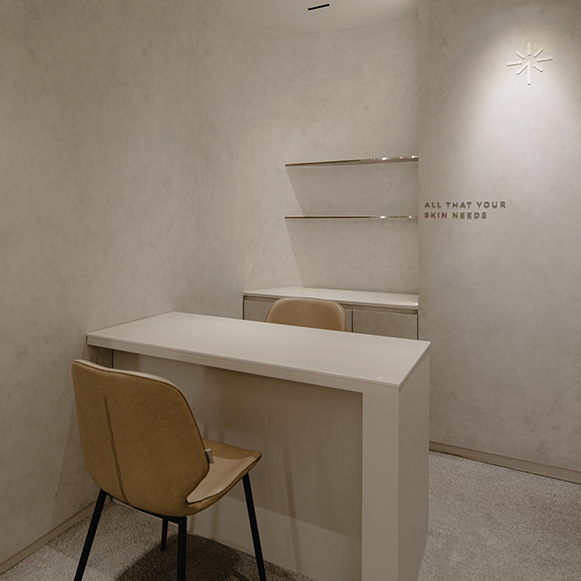
💸 How much did the entire journey cost?
Finally, let’s do the math. During my 4-day, 3-night trip to South Korea, I underwent a HIFU treatment for my entire face and also had a collagen glow treatment. The total cost was as follows:
| Cost items | Korean won | Around NTD |
|---|---|---|
| Korean-style HIFU: 300 treatments for the entire face | ₩600,000 | NT$14,000 |
| Collagen glow injection | ₩250,000 | NT$5,800 |
| Round-trip flight tickets (Songshan ↔ Gimpo) | — | NT$7,800 |
| 3 nights of accommodation | — | NT$5,400 |
| Food and transportation | — | NT$3,000 |
| In total | ₩850,000 | NT$36,000 |
If the same treatment is performed in Taiwan, the cost would be approximately NT$25,000 to NT$35,000 for 300 sessions of the Korean-style HIFU, and NT$8,000 to NT$12,000 for collagen glow treatments. In total, the cost would amount to around NT$33,000 to NT$47,000 — and this does not include the expenses for airfare and accommodation.
In other words, when I flew to South Korea to have the procedure done, including the cost of the flight and accommodation, it was actually cheaper than doing it in Taiwan. Moreover, I even got to enjoy a three-day vacation on the side.
💡 Want to read more of my real experiences? A detailed record of my solo tath of the procedures – everything is openly shared.
✨ Summary: It wasn’t actually that difficult on my first attempt.
Having written this far, what I want to say is that undergoing skin care treatments in South Korea is much simpler than you might imagine.
For visas: It’s sufficient to apply for a multi-entry tourist visa valid for five years; a medical visa is not required.
Reservation → Use BeautsGO – it features a Chinese-language interface, transparent pricing, and the same prices in both China and Korea.
Upon arrival at the clinic, there is Chinese translation available, skin examinations are conducted, and sufficient time is allocated for consultations with doctors.
Treatment → Performed personally by doctors using state-of-the-art equipment in a smooth and efficient process.
After the procedure, we will provide you with a Chinese nursing guide and help you schedule your follow-up appointment.
The cost includes both airfare and accommodation, making it even more cost-effective than doing it in Taiwan.
My only regret is that I didn’t go sooner.
Are you ready to set off? Choose the method that suits you best to start making reservations: