I. How long does the effect of an anti-aging treatment last? Here’s the answer in 30 seconds.
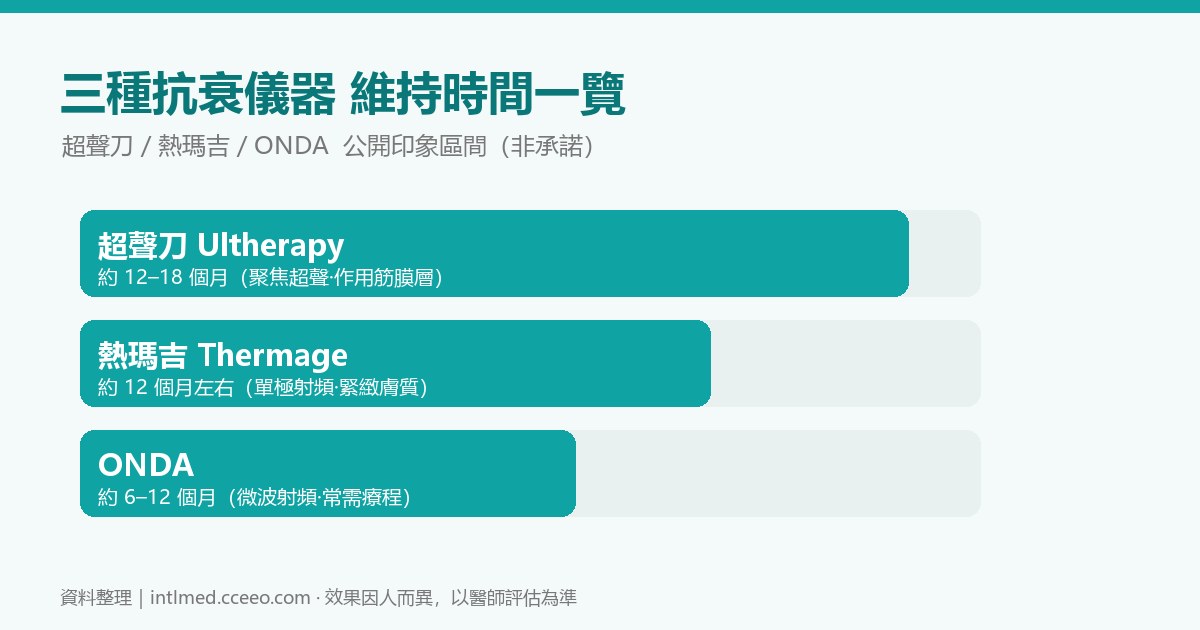
- Bottom line: Based on current market perceptions, the typical duration of effects is roughly as follows—Ultherapy with HIFU takes about 12–18 months, Thermage around 12 months, and ONDA around 6–12 months (as it tends to require more treatment sessions). These are market estimates, not guaranteed results.
- Why such a big difference? The three devices target different layers of the skin—HIFU uses ultrasonic waves to target the fascia layer, Thermage employs radiofrequency to heat the dermis, while ONDA uses microwave radiofrequency for localized tightening. Since the depth of stimulation and the types of collagen stimulated vary, the duration of lift they provide also differs naturally.
- When do results appear? All three treatments are of a gradual nature. With HIFU and Thermage, optimal results are usually achieved within 2–3 months, while ONDA works by building effects over multiple sessions—it’s normal not to see the final outcome right after a single treatment.
- My reminder: How long the effect lasts is greatly influenced by factors such as age, metabolism, treatment parameters, and post-operative care. Results can vary significantly even when using the same device on different people, so don’t treat the duration of effect as a guarantee.
- Who should read on: Those wondering “How to choose between HIFU, Thermage, and ONDA?” or “How long do the results last?” Below you’ll find detailed breakdowns, side-by-side comparisons, and tips to avoid common pitfalls.
Compare prices for anti-aging devices in South Korea before making a reservation
📍 Check availability and public information at various reputable clinics in Seoul/Busan
✨ Highlights: Get clear information on the device version (US version/Korean version), the number of units, and the total price at once, so you won’t discover mismatches once you arrive at the store.
💡 Public perception: Equipment models and pricing structures vary significantly among different clinics. It’s recommended to compare them first before scheduling an appointment.
“How long does the effect last after one treatment?” is by far the most frequently asked question about anti-aging devices. In this article, we take a detailed look at three commonly used anti-aging treatments in clinics in South Korea—HIFU (Ultherapy), Thermage, and ONDA—analyzing them based on “the depth of action → the estimated duration of effects → the speed at which results appear.” At the end, you’ll find a side-by-side comparison table, factors that influence results, and post-treatment care recommendations. Let’s be clear upfront: This article is compiled from public information and market trends, and all stated durations are approximate ranges; the actual outcome will depend on the assessment given by the doctor at the time of treatment.
II. How long does the effect of HIFU last?
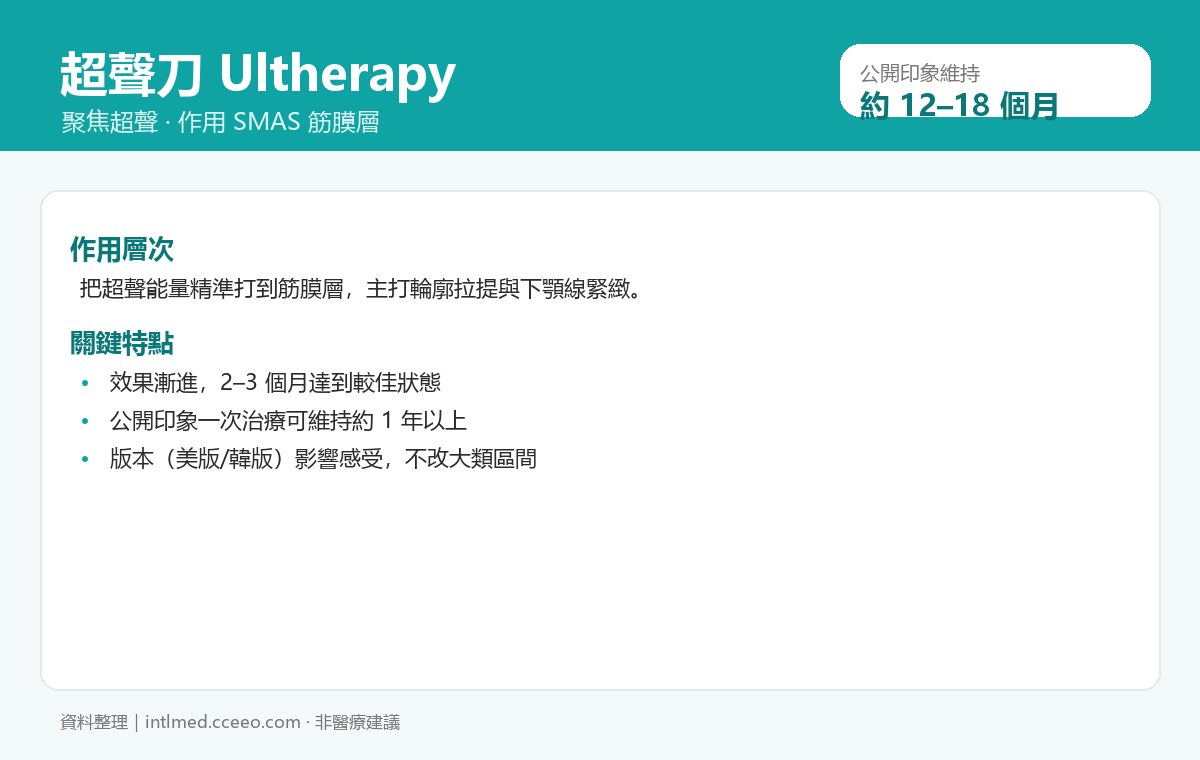
HIFU utilizes focused ultrasound to deliver energy precisely to the deeper SMAS fascia layer. This is exactly why it’s renowned for its ability to lift facial contours and tighten the jawline—by acting at such a deep level, it stimulates collagen remodeling that focuses more on strengthening the underlying structural support. According to available information, the duration of effects from a single HIFU treatment typically lasts around 12–18 months, which is on the longer side among the three options. The results develop gradually, with the best outcomes usually seen after 2–3 months, after which the effects slowly diminish as collagen naturally metabolizes.
There are two points that are often overlooked. First is the difference between versions—many clinics in South Korea use both American-made and South Korean versions of these devices. The probes, number of pulses, and handling feel vary, which can affect the treatment experience, though it doesn’t change the fundamental principle of using focused HIFU on the fascial layer. Second, the number of pulses and coverage area directly influence both the effectiveness and cost of the treatment. It’s more practical to ask ahead of time which probe will be used, how many pulses there will be, and which areas will be treated, rather than asking how long the effect will last. If you’d like to compare the differences between different generations of these devices, take a look at our comparison article on first-generation versus second-generation HIFU systems.
III. How long does the effect of Thermage last?
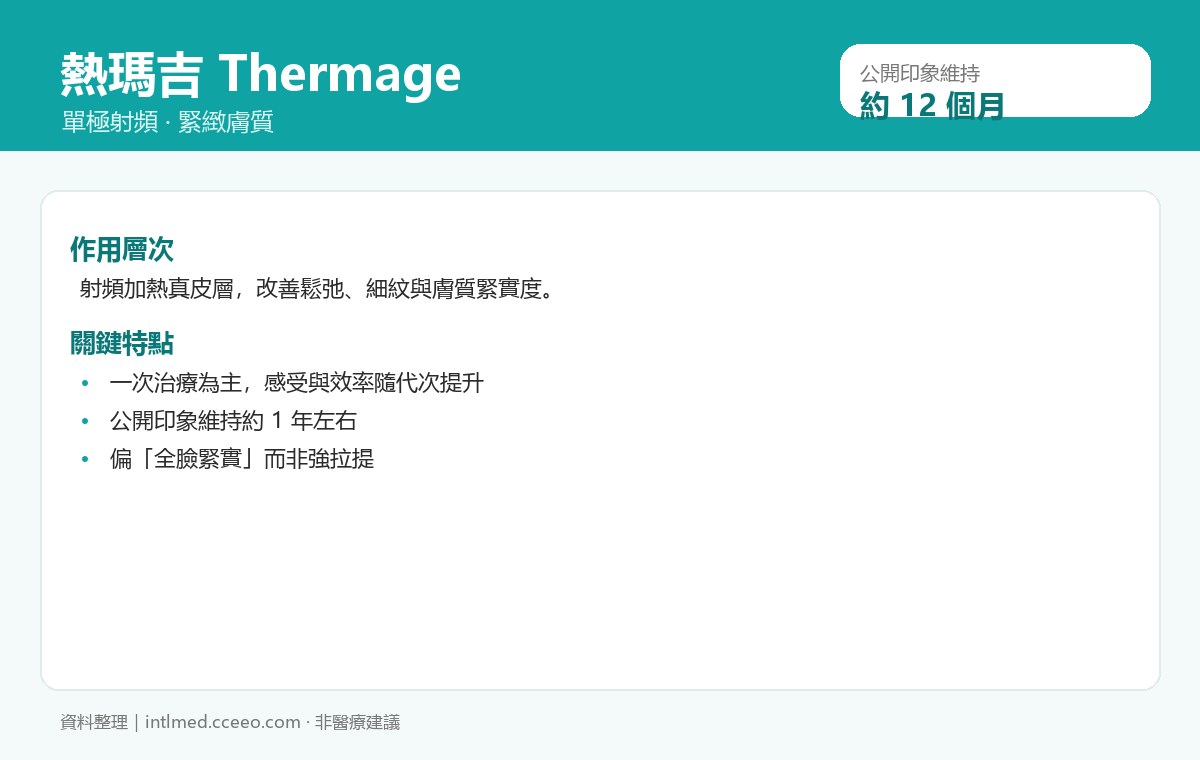
Thermage uses monopolar radiofrequency to heat the dermal layer, targeting “tightening the skin and reducing sagging and fine lines” rather than providing strong lifting effects. From what’s commonly known, the duration of results from a single Thermage treatment lasts around 12 months. Since it acts on the dermis, many people experience “tighter skin and a more defined contour” after the treatment, rather than a significantly lifted appearance.
It’s important to note that Thermage is a treatment that requires a single session, with most people getting it once a year to maintain results. While newer models bring improved efficiency and comfort, they don’t double the duration of effects. If your concern is overall facial sagging and numerous fine lines, Thermage’s broader coverage offers clear advantages. On the other hand, if you’re dealing with a weakened jawline and want Lifting effects, HIFU, which targets deeper layers, is usually more suitable.
IV. How long can ONDA last? Why is it important to follow a scheduled treatment plan?
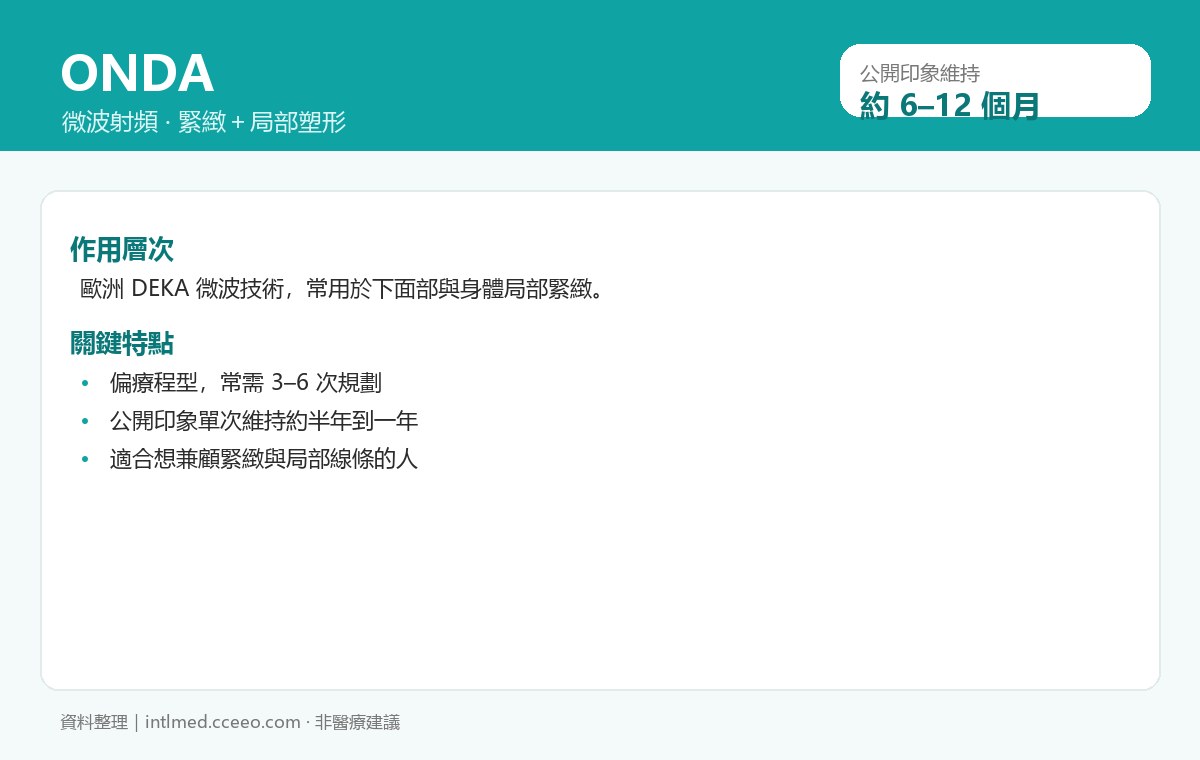
ONDA is DEKA’s Microwave RF technology from Europe. What sets it apart is its ability to target both localized fat and skin tightening simultaneously. It’s commonly used for the lower face (such as Double Chin and jawline) as well as various areas on the body. The duration of its effects is generally reported to be around 6–12 months, usually achieved through a set number of treatment sessions (typically 3–6 times). This isn’t because the results aren’t good—it works by building up effects gradually over time, with each session not being designed to deliver immediate results.
So if you come across claims like “ONDA works in just one session,” you should be skeptical. A more practical question to ask is: “How many sessions will my area require? What’s the interval between sessions? And what’s the total cost for a full course of treatment?” By breaking down the total cost to determine the per-session price and comparing it with that of standalone HIFU or Thermage devices, you can avoid making mistakes in your decision.
V. Side-by-side comparison of the time duration for the three types of devices
It’s easiest to compare the three types of devices in a single table. Let me reiterate: the duration of effect listed below represents general estimated ranges only and does not constitute any medical guarantee. This article also does not rank them as better or worse—whether one is suitable for a particular use case should be determined by a physician’s evaluation.
| Equipment | Layer of Action | Maintain a positive public image | Speed of results | Preferred requirements |
|---|---|---|---|---|
| HIFU Ultherapy | SMAS fascial layer | About 12–18 months | Gradual improvement over 2–3 months | Contour Lifting, Jaw Line Definition |
| Thermage | dermal layer | About 12 months | Gradual improvement over 1–3 months | Full-face firming, reduces fine lines |
| ONDA | Localized fat reduction + tightening | Approximately 6–12 months (for treatment courses) | Accumulate session by session | Lower face, subtle contours |
In short: the deeper the effect and the more it serves as “structural support,” the longer its duration per treatment; whereas effects that build up over time require assessment on a course-by-course basis. Those looking to create a comprehensive plan between “instrument-assisted tightening” and “injection-based skin rejuvenation” can refer to our price guide for Radiesse (a collagen-stimulating product) — the budget requirements for these two approaches differ significantly.
VI. 5 Factors Affecting the Duration of Effect from HIFU/Thermage/ONDA
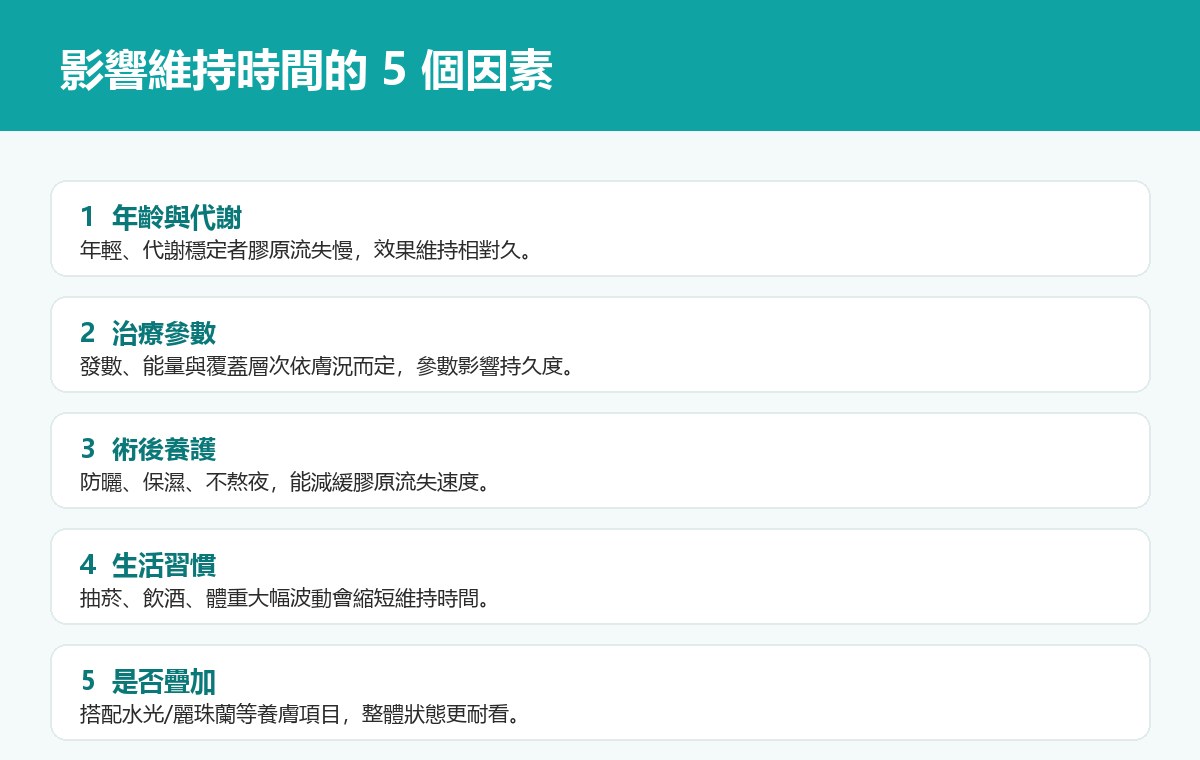
With the same device, some people can use it for a year and a half, while others feel it loses its effectiveness after just half a year. The difference mainly comes from these five factors:
- Age and Metabolism: The rate at which collagen is lost varies from person to person; younger individuals with stable metabolisms can maintain it for a longer time.
- Treatment parameters: the number of sessions, energy level, and treatment depth depend on the skin condition—different parameters result in varying effects and duration.
- Post-surgery care: Sun protection, hydration, and avoiding late nights can help slow down collagen loss—this is entirely in your own hands.
- Lifestyle habits: Smoking, drinking alcohol, and significant weight fluctuations can all significantly shorten the duration it lasts.
- Can it be used in combination? Using it alongside treatments like hyaluronic acid injections or Rejuran can enhance overall skin appearance. However, it’s important to apply these treatments in a balanced manner and avoid overusing them at once.
VII. Want to extend the lasting effect of anti-aging devices? Do this after the procedure
The device is only responsible for “starting up”; how long it can last afterward depends largely on proper maintenance. Here are a few practical tips:
- Complete sun protection: UV rays are the main external factor that accelerates collagen loss, so strict sun protection is essential after the procedure.
- Moisturization and Repair: After RF/ultrasound treatments, the skin tends to become dry; enhanced moisturization can make the recovery period more comfortable.
- Keep a healthy routine: Staying up late and stress have a direct impact on collagen metabolism—this is one of the most easily overlooked factors.
- Periodic maintenance: For single-session devices (HIFU/Thermage), maintenance can be done once a year; for treatment-based devices (ONDA), an assessment will be conducted after completing the full course as planned by the physician.
- Be cautious with multiple treatments: If you’re considering combining microneedling with hyaluronic acid or collagen treatments, first consult your doctor about the proper intervals to avoid exposing your skin to too many stimuli at once.
VIII. Anti-aging Devices: 8 Things to Keep in Mind
“12–18 months” is the general timeframe reported in the market, but it varies from person to person; be cautious of any claims that suggest this duration is a guarantee.
The fascia layer is targeted for lifting, the dermal layer for firming, and microwaves are used locally. Think carefully about what you want before choosing the right device.
Many clinics in South Korea offer both Korean and American versions of these devices, with differences in model design, probe types, and laser output settings—resulting in varying performance levels and prices. Be sure to confirm the specific model before making a reservation.
The number of sessions, treatment areas, whether anesthesia is included, and the consultation fee all directly determine the cost per session; discovering mismatches only upon arriving at the clinic is a huge waste of time.
With HIFU and Thermage, optimal results typically emerge after 2–3 months. It’s quite common to feel like “there’s no change” right after the treatment, so it’s important to allow enough time for evaluation.
ONDA is designed this way based on treatment plans — it doesn’t make sense to compare how long it lasts per session; instead, you should look at the overall cost of the entire course of treatment.
Sun protection, moisturization, proper sleep patterns, and weight management all play a role in maintaining good time quality, just as important as the treatment itself.
This article does not assume that any one particular device is superior. Whether a procedure can be performed, which one to use, and what parameters to set are all determined by the attending physician during the in-person consultation.
9. Need help getting a quote for anti-aging devices or confirming availability?
If you’re comparing different clinics and quotes for HIFU, Thermage, and ONDA, or aren’t sure which device best suits your needs, feel free to add me on WeChat. I’ll compile for you all the practical information and publicly available details I know.
WeChat ID: xycheng2204
Scan the code to add me and mention “anti-aging devices” in the note.

X. Resources on Anti-Aging Devices (In-Website Guides)
XI. Frequently Asked Questions about HIFU/Thermage/ONDA
Disclaimer: This article is compiled from public information and market trends, and it is not a medical advertisement, commercial promotion, or medical advice. No specific medical institutions or devices are recommended. All stated duration and effectiveness timelines are general ranges based on public observations and may vary from person to person. Cosmetic procedures carry risks, so it is essential to seek thorough consultation before undergoing any treatment and follow the doctor’s diagnosis.