“Is Cao Renchang really that good at Revision Surgery?” This is the question I get asked the most. Two years ago, I had Double eyelid surgery twice in China. The first time, the stitches came loose; the second time, after the incision, my right eye developed obvious scar tissue, and my left eye had multiple folds, so I always dared to show only my right side in photos. Before this revision Surgery, I did research for three months before finally flying to Seoul to see Director Cao Renchang. This article records everything from my initial consultation to two months after the surgery, including whether he is really that skilled, how the Revision Surgery is performed, and how long the recovery period actually takes—without any exaggeration or negative comments.

I. First, let’s answer the question “Is it really that amazing?” It is amazing, but it’s no magic.
To get straight to the point: Dean Cao Renchang’s restoration techniques are indeed effective, but he isn’t a magician who can turn any failed procedure into a perfect outcome. His “effectiveness” is evident in a very specific aspect: he dares to take on cases that other doctors would refuse, and before proceeding, he will clearly explain to the patient “to what extent the restoration is possible.” During my consultation, he told me directly that the excess fat removed during the previous surgery had caused the skin to adhere to the lifting muscles in my right eye. The restoration would involve separating these adhesions and redistributing the skin’s tension, which could improve the condition by 70%, but it would not restore it to its original state before the surgery. This transparent approach of outlining the limitations of the treatment actually made me feel more confident in his abilities.
His qualifications are undeniable: Doctor of Medicine from Yonsei University, chief physician in the Plastic Surgery Department at Yonsei University Hospital. He has specialized in eye restoration for over 40 years and has performed more than 30,000 such procedures; colleagues in the field affectionately call him the “King of Eyes.” BIO Plastic Surgery originated from the Peninsula Eye Plastic Surgery Hospital, which has a history of nearly 60 years. In 2012, Director Cao collaborated with Directors Hong Seong-pyo, Park Dong-man, and Shin Yong-ho to upgrade and rename the institution. This combination of specialized expertise and historical heritage is precisely what a doctor specializing in eye restoration should possess, as such procedures rely on profound familiarity with anatomical structures, rather than inspiration. If you are also hesitating about whether to undergo eye restoration or how to choose a doctor for the procedure, you may find my previous article reviewing Director Cheng Jinmo’s Double eyelid surgery experience helpful. Both Director Cheng and Director Cao are renowned experts in eye restoration, though their approaches differ.

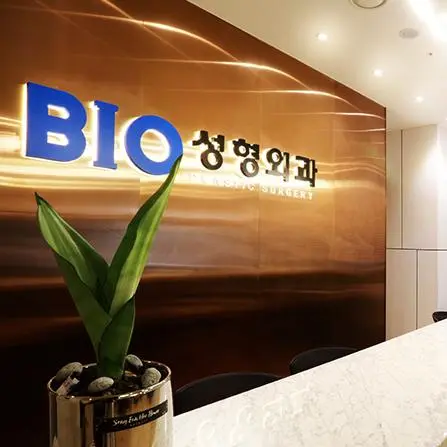
Waiting area of BIO Plastic Surgery Sinsa Branch, 107 Daosan-daero, Gangnam District
II. In-person consultation: Director Cao examined my three sets of photos and asked me five questions.
I made an appointment on a weekday morning at the BIO clinic in Sinsa. The clinic is open from 10 am to 6 pm on weekdays and until 3 pm on Saturdays. Please make sure not to arrive during the closing hours. The consultation will be conducted by Director Cao himself, rather than a consultant who will pre-screen the applicants. He asked me to bring three sets of photos: the initial state before the treatment, the appearance after the first failure, the appearance after the second failure, and current photos showing different angles with my eyes open and closed.
The five questions he asked were very detailed: where the two surgeries were performed, what procedures were used, whether there were any infections or periods of Scar tissue formation after the surgeries, whether it was difficult to open my eyes now, and whether I had any symptoms of dry eyes. The fifth question was crucial—dry eyes could indicate that the tear glands might have been affected, so special care would be needed during the repair process to avoid damaging these structures. He used a magnifying glass to examine the edges of my eyelids and the pattern of the Scar tissue, and confirmed that the scar on my right eye was of the adhesive type, while the multi-layer scar on my left eye was due to uneven tension in the levator muscles. The treatment plan was as follows: repair for both eyes, release of the adhesive scar on my right eye, and adjustment of the levator muscles on my left eye, all under local anesthesia.
It should be noted that before the in-person consultation, be sure to bring all previous surgical records and post-operative photos; Director Cao will compare them one by one. If this is your first time going to South Korea for surgery, refer to this comprehensive guide for medical aesthetics treatments in South Korea when preparing your medical records and planning your trip. Although this guide focuses on Dermatology, the preparation steps are generally applicable regardless of the specific procedure.

Comparative case studies of eye restoration using BIO techniques (authorized); the results of restoration vary from person to person.
III. On the day of the surgery: Under local anesthesia, I remained conscious throughout the procedure, which took approximately one hour.
Revision Surgery is more complex than the initial procedure; mine took approximately an hour. The surgery was performed under local anesthesia, so I remained conscious throughout the entire process. Director Cao mentioned that the advantage of using local anesthesia for Revision Surgery is that it allows me to repeatedly open and close my eyes during the operation, enabling me to make immediate adjustments to the symmetry and curvature of the results. This approach is similar to what Director Cheng Zhenmo of Cheongdam FIRST Clinic uses – namely, allowing for real-time adjustments during the eye repair procedure.
During the procedure, I could feel him carefully separating the old adhesions around my right eye; the pulling sensation was noticeable but not painful at all. He frequently asked me to open my eyes so he could assess the overall results and make fine adjustments. I heard very specific instructions like “Loosen the tension on the right side a bit more” or “Raise the levator muscle of the left eye by half a millimeter.” After the surgery, when I looked in the mirror immediately, I noticed that most of the visible scar tissue had disappeared. Although the areas still looked swollen, the contours now appeared much smoother. The four members of the nursing team worked together seamlessly, and all the postoperative instructions regarding ice application and medication were provided in Chinese.

The BIO operating room has extremely high requirements when it comes to lighting and sophisticated surgical instruments for eye repair procedures.
IV. How much does it cost? Why is eye repair more expensive than initial eye treatment?
It’s common knowledge that repair procedures are more expensive than initial treatments, as removing adhesions and reconstructing structures takes more time than starting from scratch. When Dr. Cao conducted the consultation, he provided a written quote, without any impression of charging differently based on the patient. Below is the reference price list for eye treatments, listed in Korean won. For repair procedures, due to the varying complexity of each case, the actual cost will be determined based on the consultation results:
Several key points:
The Natural Adhesion Double eyelid surgery costs ₩2,000,000, which is the initial price for this type of procedure; the Full incision method costs ₩4,500,000, also representing the initial price. For Revision Surgery cases, on-site consultations are required, and the service I provide falls into the mid-to-high price range. Comparatively, renowned experts in Gangnam’s Double eyelid surgery generally charge between ₩5 million and ₩91.2 million. Although Director Cao’s pricing is on the higher end, considering his 40 years of experience in this field and over 30,000 successful cases, I believe this additional cost represents an investment in reduced risk. If you want to understand the general price ranges of plastic surgery clinics in South Korea, you can refer to this Edition’s in-depth review of the埋线 surgery process.

Postoperative recovery guidelines: It takes longer to reduce swelling than initially expected.
V. Recovery Journal: The recovery process is slower than expected; the swelling did not subside until the 21st day.
The recovery period after the procedure is longer than initially expected, so it’s important to be mentally prepared for this.
Day 1–3: Swelling reaches its peak; the right eye swells more due to the removal of adhesions, and the bruising turns yellow.
Day 7: The stitches are removed, and the process is painless.
Day 14: Fifty percent of the swelling has subsided; the visible ridges have almost disappeared, but the areas where the stitches were still present feel a bit firm.
Day 21: Seventy to eighty percent of the swelling has gone away, and you can now face people without any discomfort.
Day 30: The scars under the eyes fade, and the lines become smoother when you open your eyes.
Day 60: The results are basically final: the ridges on the right eye have completely disappeared, and the multiple folds on the left eye are no longer visible, making it much easier to open your eyes—this is what I’m most satisfied with.
To be honest, the effect of the treatment is not about “becoming someone else” but about “returning to a normal state.” My previous failed eye surgery left me feeling self-conscious for two years, but now I can even take casual photos without any concerns. If you’re expecting exaggeratedly large European-style eyes, then Director Cao’s style is not suitable for you—he specializes in natural results that are virtually invisible when closed and look natural in motion. This is different from the “improved complexion” achieved through Dermatology treatments; surgical procedures involve structural changes that require precise adjustments. You can refer to my previous diar entries about Dermatology treatments and Elvia Thermage to understand the differences between cosmetic skin care and surgical interventions.

The team of four deans from BIO, with Cao Renchang specializing in eye repair treatments.
VI. Who is suitable for consulting Cao Renchang, and who should avoid doing so?
- For those in need of complex eye repair procedures—such as excess skin, multiple layers of wrinkles, damaged levator muscles, or Scar tissue—this is Director Cao’s area of expertise.
- Cases that had failed after multiple attempts at correction, and those that other doctors were too afraid to take on—it was through these cases that he built up his portfolio.
- For those who prefer a natural look with no visible traces even when eyes are closed – their aesthetic preferences lean towards a subtle, Eastern style.
- Those who are willing to wait in line for appointments and accept that the recovery period after treatment may be longer than initially expected.
On the other hand, if you have naturally good Double eyelid surgery results and no need for revision, there’s no need to consult Director Cao; seeking the services of renowned experts like Director Cheng Zhenmo would be sufficient. However, if you are looking for the cheapest option for Double eyelid surgery, BIO’s mid-to-high price range may not suit you. For visa information, refer to the South Korea visa guide; it is recommended to stay for 10–14 days after the procedure for observation.
VII. FAQ at the End: The Most Frequently Asked Questions about Eye Restoration
Q1: Is Cao Renchang really that effective in repairing eyes? What is the success rate?
Based on my own experience and the information I have gathered, his strength lies in his willingness to take on challenging cases and his conservative approach to pre-operative assessments. The more than 30,000 restoration cases he has handled are real examples of his expertise, but I am unable to provide you with a specific success rate. Restoration surgeons are usually very cautious about taking on too many difficult cases, but Director Cao will clearly define the upper limit for such cases.
Q2: How long does it take to schedule a Revision Surgery?
I made my appointment one and a half months in advance. Director Cao only accepts a limited number of patients each day, and the waiting time gets even longer during the peak season. It is recommended to book your appointment through the official platform to secure your slot in advance.
Q3: Can I still have a face-to-face consultation if I don’t speak Korean?
The term “BIO” has a Chinese translation; it is recommended to look up the key terms related to in-person consultations in advance. When I use the platform to make reservations, Chinese customer service staff will follow up with me.
Q4: Will it fail again after the repairs are done?
The results after the repair are more stable than they appeared at first glance, but no surgical procedure can guarantee permanent results. Director Cao mentioned that the repaired tissue becomes more fragile, so he advised against undergoing further surgeries. After my repair, I made sure not to touch that area again.
Q5: How long is the recovery period after the treatment? How soon can I return to my country?
The recovery process is slower than expected; it wasn’t until the 21st day that the swelling had reduced by about 70-80%. It is recommended to wait for 10-14 days, remove the stitches and observe the results before flying.
Q6: How can I make the reservation process as hassle-free as possible?
By booking through the BeautsGO platform, you can secure a fixed price and enjoy Chinese-speaking customer service. Just click the button below:
The above is a personal and genuine account of my recovery experience. The results of the surgery can vary from person to person, so please consult a doctor for a customized treatment plan. The prices mentioned in this post are based on current reference rates and may be subject to changes.
VIII. Related Recommendations: These might also interest you.
When doing research on eye restoration treatments, I read these articles several times. Reading about eye surgeries in South Korea and the post-operative recovery process helped me gain a better understanding of the subject.
IX. Navigation to Popular South Korea Medical Aesthetics Institutions
For everyone’s convenience (and to help search engines), below are some popular clinics that have been personally tested by our site. Click on the links to view the complete reviews:
X. Find more content about medical aesthetics in South Korea by category.
Looking to search by project or region? Below are the classification links on our website: